
Dismantling a scrap electric motor is more profitable when the extra value of the recovered materials exceeds the additional processing costs. Selling whole may be the better option when that margin is small, the motors take too long to process, or you would need equipment for only occasional jobs.
The 191.2 kg worked example below shows 100.89 USD more in material sales revenue after dismantling, before added costs. Use it as a calculation method, then replace the weights, prices and costs with figures from your own motors.
63.10 USD
Worked example · gross revenue
163.99 USD
Worked example · gross revenue
100.89 USD
Worked example · before added costs
Source: BSGH Recycling’s motor dismantling video.
This 191.2 kg case includes 10.35 kg of copper windings and 180.85 kg of other listed materials.
The figures above compare gross material revenue at the article’s example prices. Deduct your actual processing costs to assess the additional return.
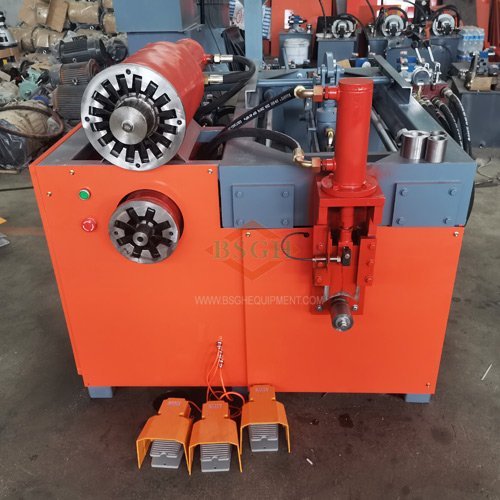
For a suitable motor, dismantling involves removing the casing, cutting the stator windings and extracting the copper coils. A BSM-40 motor dismantling machine combines winding cutting and pulling functions; confirm the stator dimensions and tooling before choosing a setup. For the process in more detail, see how to remove copper from an electric motor.
A suitable pulley puller can help with pulley removal where required. Further separation of shafts, bearings, rotors and casings adds handling time, so include those steps in your cost estimate. Sort the resulting materials according to your scrap buyer’s requirements.
Worked example: material weights, assumed prices and gross sales revenue
For simplicity, this example values all four non-copper groups together at 0.22 USD/kg: 180.85 kg × 0.22 = 39.787 USD. This shared rate is an assumption, not a claim that every material has the same market value. Use separate buyer quotes wherever grades differ.
Using the assumed whole-motor price of 0.33 USD/kg, the same 191.2 kg motor would generate approximately 63.10 USD before any selling costs:
At these assumed prices, separating the materials increases gross revenue. However, this does not establish how much profit the operator makes. Compare both routes on the same basis, including any differences in transport, handling, buyer deductions and disposal costs.
The extra processing costs must stay below approximately 100.89 USD per motor for dismantling to outperform selling whole in this example. Because processing time and operating costs have not been measured here, an actual net-profit figure cannot be established. Use the cost worksheet below to find your own margin.
Example limits: these inputs have no stated quote date, location or buyer grade and should not be treated as current market prices. The listed weights add up to the full motor weight; in your own trial, record unsaleable residue and handling losses separately. This single example does not establish a typical copper yield.
A larger supply alone does not make dismantling profitable. Start with a representative sample of your usual motors, record saleable output and total handling time, and obtain comparable quotes for selling whole and selling the separated materials. Keep motor purchase costs consistent between both options.
• Identify the motor type, winding material, size and condition. Do not apply a copper-winding calculation to an aluminum-wound motor or assume a smaller motor has the same material proportions as this example. Confirm that the proposed machine can handle the stator dimensions.
• Ask your buyer how the recovered windings and other materials will be graded, including any deductions for contamination or mixed materials. Use quotes from the same period and account for differences in transport and minimum delivery quantities.
Cost worksheet — complete using your own trial:
Count setup, casing removal, cutting, pulling, sorting and cleanup. Two people working for half an hour equal one worker-hour. Include your own time even if you operate the machine yourself. Only include costs that differ between the two routes, and do not deduct a buyer’s allowance twice if it is already reflected in the quoted price.
Additional operating margin per motor = separated-material revenue − whole-motor revenue − additional operating costs. A positive result supports dismantling with existing suitable equipment; a negative result favors selling whole under those inputs. This margin is before recovering a new machine’s purchase cost and before tax or financing costs.
A profitable processing job does not automatically justify buying equipment. Estimate how many suitable motors you can actually process and sell each month, allowing for available labor, downtime and an irregular supply. Use this realistic volume when estimating payback.
Simple payback worksheet:
Use operating cash costs in this payback calculation. Do not deduct the full equipment purchase price or depreciation again from the monthly contribution. If the contribution is zero or negative, the investment does not pay back under those assumptions. This simple estimate excludes tax, financing and the time value of money.
Recheck the result with lower scrap prices, fewer motors per month and longer processing times. If a modest change removes the margin, keep selling whole or gather better trial data before investing. Dismantling is the stronger option when measured output, processing costs and a dependable supply support it.
Send 3T photos of your scrap motors, stator dimensions, estimated monthly volume and local prices for whole motors and separated materials. Tell us whether you already have dismantling equipment. We can help assess a suitable setup and the processing factors to include in your comparison.
Coque de moteur de processus | Stator de moteur de processus | Arbre de moteur
Découpe de démarreur automatique | Pressage de démarreur automatique | Chauffage de démarreur de voiture | Machine de tirage de démarreur de voiture
Machine de découpe d'alternateur de voiture | Machine de tirage d'alternateur de voiture
Ligne de recyclage de stator de moteur | Ligne de recyclage de rotor de moteur | Usine de recyclage de moteurs entiers
Pour le recyclage des petits transformateurs
Machine de découpe de coque de compresseur | Recyclage de stator de compresseur
Principalement pour le recyclage des moteurs de ventilateurs de plafond
Pour tous les types d'interrupteurs magnétiques de voiture
Pour tous les types de moteurs de moyeu de vélo électrique
Principalement pour la presse de toutes sortes de pièces de moteur | Assistance personnalisée
Veuillez remplir le formulaire suivant et vos demandes :
 French
  English
  Spanish
  Portuguese
  German